

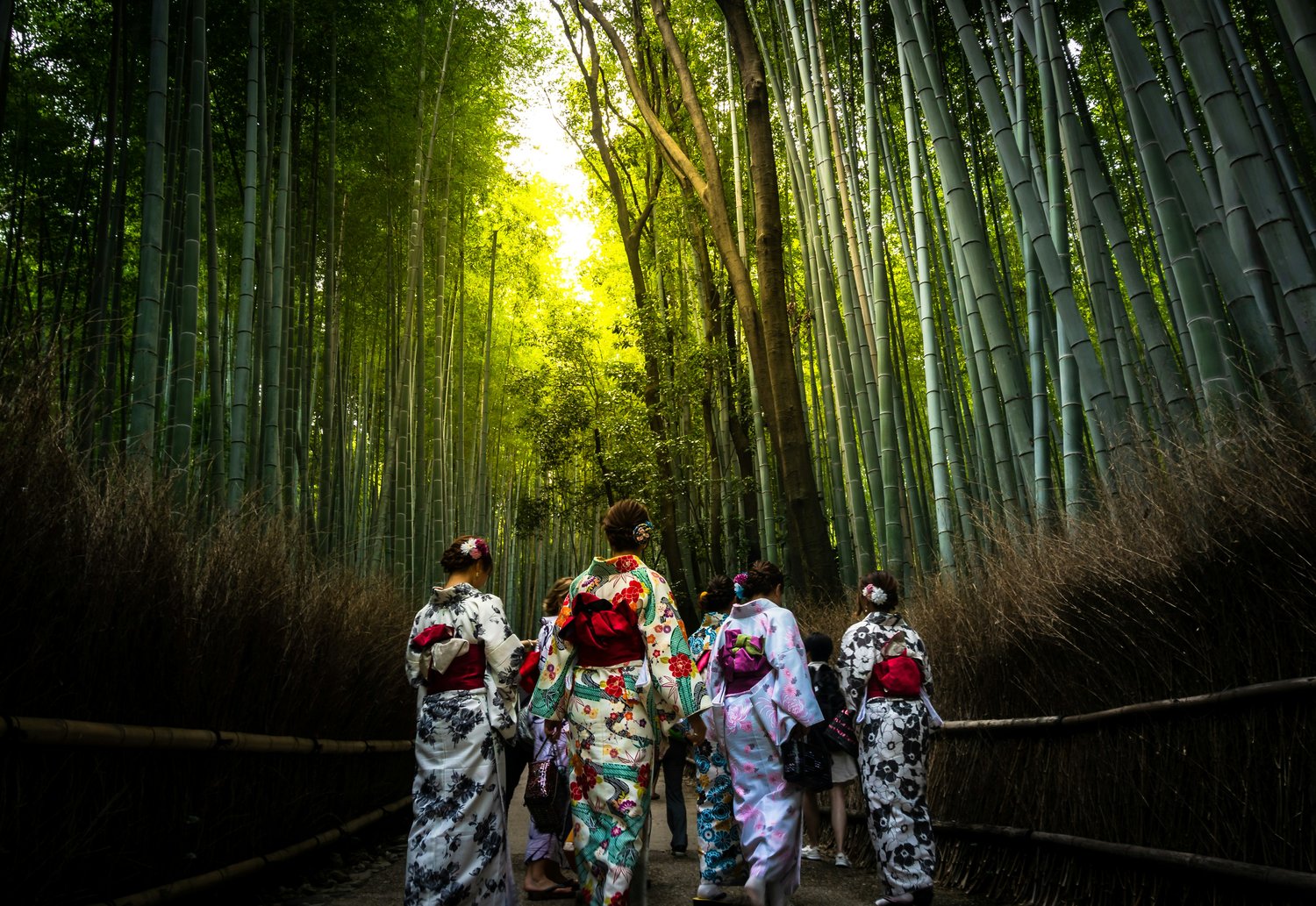
In the global business landscape of 2026, many professionals may find that the primary challenge is not the acquisition of data, but the velocity at which it is delivered. Operating under a constant stream of digital input can lead to a state of "continuous partial attention," where the focus remains purely linear. Over time, this environment can narrow one's strategic vision, making it difficult to perceive the broader context and subtle nuances of a complex international market.

The Concept of "Shinrin-yoku" as a Framework
To address this cognitive environment, the Japanese practice of Shinrin-yoku (森林浴)—commonly referred to in the West as "Forest Bathing"— offers a sophisticated, organic approach to sensory recalibration. Rather than a rigid methodology or a goal-oriented exercise, it is perhaps better understood as the simple act of stepping away from the desk and into a forest environment—allowing the sensory input to shift from binary to organic.
The value of this practice often lies in its lack of specific purpose:
- Unstructured Presence: There is no set destination or target. One simply walks, allowing the senses to encounter the natural textures and sounds of the forest at a human pace.
- The Quality of Light: Observing Komorebi (木漏れ日)—the dappled sunlight filtering through the canopy—provides a visual depth and complexity that digital interfaces do not possess.
- Informational Deceleration: Moving from the high-speed rhythm of a screen to the organic pulse of a forest allows for a natural recalibration of one's analytical frame.

Potential Implications for Professional Perception
Engaging with a natural environment is not necessarily about "improvement," but about maintaining a balanced perspective. In international business, where success often depends on detecting unwritten rules and atmospheric changes in a partnership, a clear and settled sensory frame is a practical asset. Stepping into a forest environment may help preserve the capacity to detect these subtle signals amidst the noise of a high-speed career.

Professional Application: Diversifying the Sensory Frame
As we approach Earth Day on April 22nd—a day widely observed in the United States and globally to reflect on sustainability—it is a timely moment to consider "environmental diversification" as part of a professional routine. In the U.S. business context, the weeks leading up to Earth Day often serve as a catalyst for rethinking sustainability, not just for the planet, but for the longevity of one’s own intellectual and analytical resources.
- Strategic Detachment: Periodically detaching from digital streams to walk among trees is an opportunity to reset one’s vision.
- Expanding the Analytical Scope: Utilizing natural surroundings allows for a transition from narrow data-processing to a broader, more integrated strategic view.

Conclusion: The Value of Contextual Insight
In an increasingly automated world, it may be that our most unique strength lies not in the speed of our processing, but in the potential for deeper human insight. Exploring a practice like Shinrin-yoku can serve as a reminder that clarity is not always a goal to be actively achieved—sometimes, it may simply be what remains when we stop, step into the silence of the forest, and allow ourselves to observe the scale of the world we operate within.